
Traffic Rules in Australia: A Guide for Tourists and Overseas Drivers
 By Axel Donovan
| Update on: Oct 15, 2026
By Axel Donovan
| Update on: Oct 15, 2026
In Australia, drive on the left, follow speed limits, wear seat belts and give way as required. Before driving, check that your overseas licence is recognised in every state or territory on your route. A current licence alone does not establish your eligibility to drive.
Many Australian road rules are similar, but licensing requirements, some driving rules and penalties differ between jurisdictions. This guide explains the essentials for tourists driving ordinary passenger cars, using examples from New South Wales, Victoria and Queensland. Check the relevant road authority’s current guidance for your itinerary.
- 1. Drive on the Left
- 2. Follow Speed Limits and Drive to the Conditions
- 3. Keep Left Where Required
- 4. Wear Seat Belts and Arrange Suitable Child Restraints
- 5. Check Mobile Phone Rules Before Using Navigation
- 6. Understand Merging and Changing Lanes
- 7. Give Way Correctly at Intersections
- 8. Give Way to Vehicles Already in a Roundabout
- 9. Avoid Alcohol and Drugs When Driving
- 10. Follow Road Markings When Overtaking
- 11. Learn Melbourne’s Tram and Hook-Turn Rules
- 12. Prepare for Wildlife and Long Distances
- Can Tourists Drive in Australia With an Overseas Licence?
- Before Collecting Your Rental Car
- Frequently Asked Questions
- Plan Your Driving Holiday and Entry Requirements Separately
1. Drive on the Left
Traffic travels on the left-hand side of Australian roads, and roundabouts operate clockwise. Most rental cars have the steering wheel on the right.
If you normally drive on the right, take time to become familiar with the vehicle before leaving the rental location. Remind yourself to keep left after leaving car parks, petrol stations and roadside stops.
Transport Victoria’s guidance for visiting drivers provides a useful introduction to local driving conditions.
2. Follow Speed Limits and Drive to the Conditions
Speed limits are expressed in kilometres per hour. The limit is a maximum, not a target: rain, poor visibility, traffic and road conditions may require a lower speed.
In NSW, default limits on roads without speed-limit signs are 50 km/h in built-up areas and 100 km/h on other roads. These are NSW examples, not a substitute for checking the rules elsewhere.
Watch for school zones, roadworks and electronic speed-limit signs. Reduced school-zone limits apply during the days and times specified by the applicable rules and signs. Your licence may also impose a lower maximum speed.
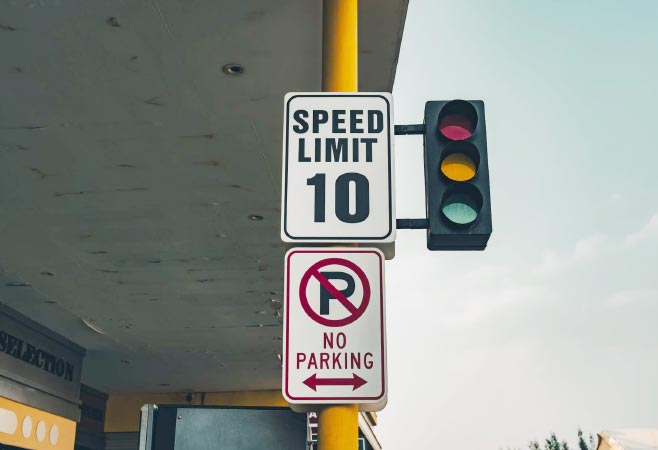 Traffic rules in Australia and basic Australian road laws for tourists
3. Keep Left Where Required
Do not treat the right-hand lane as a lane you can occupy simply because you are travelling at the speed limit.
In Queensland, on multi-lane roads with a posted limit of 90 km/h or more, or where a “Keep left unless overtaking” sign applies, drivers must stay out of the right-hand lane unless an exception applies. Exceptions include overtaking, turning right, making a U-turn, avoiding an obstruction, congested traffic and permitted use of a special-purpose lane.
Check local rules when crossing state borders. Never exceed the speed limit to overtake.
4. Wear Seat Belts and Arrange Suitable Child Restraints
Drivers and passengers must use seat belts or appropriate child restraints as required by local law.
Before setting off, check that each person has an appropriate seating position and that restraints are properly fastened. Do not share a seat belt between passengers.
If travelling with children, arrange suitable restraints with your rental company before collection. Check the rules for the child’s age and circumstances, together with the restraint’s suitability and installation.
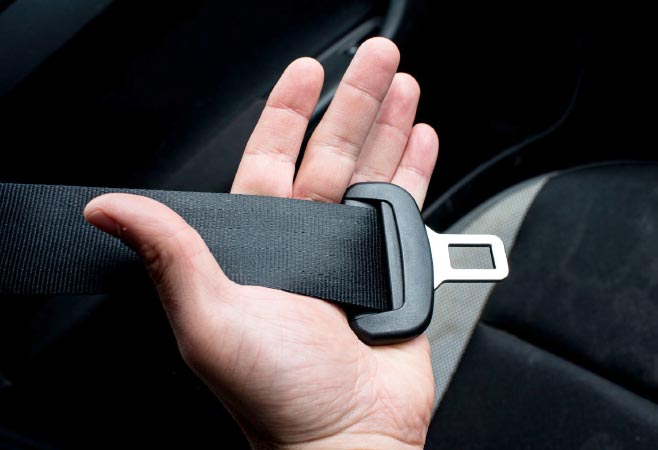 Basic driving rules in Australia including mandatory seat belts
5. Check Mobile Phone Rules Before Using Navigation
A phone mount does not automatically make every use of a phone legal.
For example, NSW allows full-licence drivers to use phones for specified functions under hands-free or mounted-device conditions. Learner, P1 and P2 drivers face stricter restrictions: phone-based navigation is prohibited while driving, including when the phone is mounted or hands-free, subject to specific permitted exemptions.
Being stopped at traffic lights does not make prohibited phone use lawful.
Check which restrictions apply to your licence. Set up any permitted navigation before departure. If you need to use your phone beyond what is allowed while driving, park legally and safely out of the line of traffic first.
6. Understand Merging and Changing Lanes
The key distinction is whether you are crossing a lane marking or joining another line of traffic where the separating markings have ended.
The following examples follow NSW guidance:
|
Situation |
Who gives way? |
|
You change from one marked lane into another |
You give way to vehicles already in the lane you are entering |
|
Your lane ends and you cross a broken line into the adjacent lane |
You give way to vehicles already in that lane |
|
Two lines of traffic reduce to one without separating lane markings |
The vehicle behind gives way to the vehicle ahead |
Example: If your motorway entry lane ends and you must cross a broken line, being slightly ahead does not give you priority over traffic already in the lane.
Signal, check mirrors and blind spots, and move only when safe. Do not assume that the vehicle on your left or right automatically has priority.
 Australian road rules for merging lanes and changing lanes safely
7. Give Way Correctly at Intersections
Follow traffic lights, signs, road markings and the applicable give-way rules.
At a Stop sign, come to a complete stop at the required position before proceeding when permitted. At a Give Way sign, slow down and stop if necessary.
For example, Victoria’s guidance explains that:
- At an ordinary intersection without traffic lights, signs or lines, drivers give way to vehicles approaching from the right.
- When turning right, drivers give way to oncoming vehicles travelling straight ahead or turning left, subject to the applicable rules.
- At a T-intersection, traffic on the terminating road gives way to traffic on the continuing road.
Different situations have different requirements. Do not apply a single “give way to the right” shortcut to roundabouts, T-intersections and every other junction.
8. Give Way to Vehicles Already in a Roundabout
Australian traffic moves clockwise around roundabouts. Slow down on approach, select the appropriate lane and follow lane arrows and signs.
In NSW, you must give way to all vehicles already in the roundabout, including vehicles that entered from your left or directly opposite.
For NSW roundabouts:
- Indicate left when approaching to turn left.
- Indicate right when approaching to turn right or make a U-turn.
- Do not indicate on approach when going straight ahead.
- Indicate left when leaving, if practical.
Plan your lane before entering. If a lane change becomes necessary, follow lane markings, indicate and give way to vehicles in the lane you are entering.
9. Avoid Alcohol and Drugs When Driving
Alcohol limits depend on the jurisdiction, licence category and vehicle.
For example, NSW requires a blood alcohol concentration below 0.05 for fully licensed ordinary car drivers, including eligible overseas full-licence holders. Learner and provisional drivers have a zero limit, and certain vehicle categories have a lower limit than ordinary full-licence drivers.
These limits are not a reliable way to calculate how many drinks you can have. The safest approach is not to drink if you will drive.
Check whether medicines can affect your driving, and do not drive under the influence of drugs.
 Australia drink driving rules and blood alcohol concentration limits
10. Follow Road Markings When Overtaking
Only overtake where it is legal and safe. Check visibility, approaching traffic, road markings and signs before moving out.
Do not assume that an empty road allows you to cross a solid dividing line. Requirements depend on the marking and jurisdiction. Victoria’s detailed guidance includes limited exceptions, such as passing a bicycle rider where the specified safety conditions are met.
If you are uncertain whether a manoeuvre is permitted, wait for a clearly lawful and safe opportunity.
11. Learn Melbourne’s Tram and Hook-Turn Rules
Driving near Melbourne trams requires particular care.
At a roadside tram stop without a safety zone, stop behind a tram when its doors are open. Wait until the doors close and pedestrians have cleared the road. Victoria’s guidance permits passing at no more than 10 km/h once those conditions are met.
Stops with safety zones have different passing arrangements. Follow the official guidance for driving with trams.
At intersections displaying a hook-turn sign, a right turn is made from the left-hand lane. Move into the designated waiting position without blocking pedestrian crossings, then wait until the lights for the road you are entering turn green and it is safe to turn.
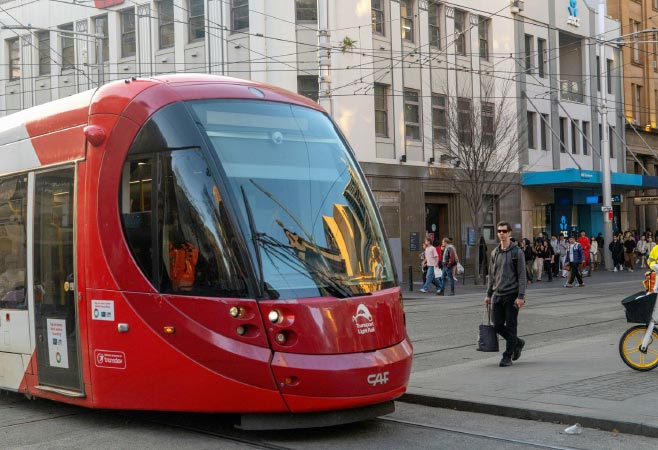 Australia driving rules for navigating Melbourne roads and trams
12. Prepare for Wildlife and Long Distances
Australian road trips can involve long distances and unfamiliar rural roads.
Watch for wildlife, particularly around dawn and dusk. Reduce speed when visibility is poor, and avoid planning an itinerary that depends on driving while tired.
Transport Victoria recommends taking a break every two hours. Treat this as a planning guide, not a reason to continue if you become tired sooner.
Plan fuel stops, rest breaks and overnight accommodation before a long journey. Stop at a safe, designated location when taking photographs.
Can Tourists Drive in Australia With an Overseas Licence?
Many tourists can drive using a current overseas licence, but eligibility depends on the state or territory and the driver’s circumstances.
Check the permitted vehicle class, licence conditions, document requirements, recognition period and any restriction on your authority to drive.
An International Driving Permit accompanies your overseas licence; it does not replace it.
Victoria
VicRoads applies a six-month period starting when you begin living in Victoria; leaving and returning does not reset it. Your licence must cover the vehicle, and exclusions apply, including suspension or disqualification.
If your licence is not in English, carry an English translation or an International Driving Permit in English alongside it. Read the full: VicRoads overseas-licence requirements.
Queensland
Visitors can use a valid overseas licence subject to its conditions and their continuing authority to drive. Queensland advises carrying a recognised English translation if the licence is not in English.
Read the Queensland overseas-licence guidance, particularly if your residence or visa circumstances change.
New South Wales
NSW permits eligible temporary overseas visitors to use an overseas licence for up to six months, subject to its conditions. Carry your licence and, if it is not in English, an English translation or International Driving Permit.
Rules differ for some other groups, including New Zealand licence holders, Australian citizens and permanent residents.
Rental companies may impose additional conditions. Confirm their document, age, vehicle and insurance requirements before booking.
Before Collecting Your Rental Car
Use this checklist:
- Confirm that you can legally drive in every jurisdiction on your route.
- Bring your overseas licence and any required supporting documents.
- Check the rental agreement and insurance conditions.
- Arrange suitable child restraints.
- Learn the vehicle’s controls before leaving.
- Check which navigation-device rules apply to your licence.
- Plan rest stops and realistic daily distances.
- Review the current road rules for your destinations.
Frequently Asked Questions
Which side of the road does Australia drive on?
Vehicles drive on the left. Most rental cars have the steering wheel on the right.
Is an International Driving Permit enough on its own?
No. Carry your overseas licence with any required International Driving Permit or translation, and check the requirements where you will drive.
Who gives way when two lanes merge?
It depends on the markings. In NSW, crossing a broken lane line means giving way to vehicles already in the lane. When two lines of traffic become one without separating markings, the vehicle behind gives way to the vehicle ahead.
Do I only give way to traffic on the right at a roundabout?
No. NSW requires drivers entering a roundabout to give way to all vehicles already inside it.
Can I use my phone for directions?
That depends on local rules and your licence category. A phone holder does not automatically make navigation use legal. Check the applicable restrictions before departure.
Plan Your Driving Holiday and Entry Requirements Separately
Permission to enter Australia and permission to drive are separate matters. Check your entry requirements with the Department of Home Affairs and your driving requirements with the relevant state or territory road authority.
For enquiries about available travel visa support, contact Australian Immigration Services to ask what assistance is available for your circumstances. Australian Immigration Services (auimmigration.org) is independent of the Australian Government.
Related Articles
- eSIM in Australia: How to Choose and Set Up a Plan
- Perth Airport Guide: Terminals, City Transport and Nearby Hotels
- Brisbane Airport Guide: Terminals, Transport, Taxis and Hotels
- Australia Tulip Season: Best Time to See Tulip Gardens and Festivals in 2026
- Melbourne Airport Guide: Terminals, Transport, Transfers, Accommodation and Travel Tips
- Sydney Airport Guide: Terminals, Airport Code, Transport, Accommodation and Travel Tips
- Tipping in Australia: Tipping Culture, Restaurants, Hotels and Etiquette
- Lavender in Tasmania: Lavender Farms, Season, Tours and the Best Time to Visit
- Instagrammable Places in Australia: Picture-Perfect Destinations for Your 2026 Trip

HOW CAN WE HELP?
 NEED HELP 24/7
 United States
+1 949 346 9868
United States
+1 949 346 9868
 United Kingdom
+44 0330 822 7696
United Kingdom
+44 0330 822 7696
 Singapore
+65 6485 3630
Singapore
+65 6485 3630
 Viber
+65 8174 8526
Viber
+65 8174 8526

APPLY WITH CONFIDENCE


|


